当前最佳位置
#32
跨越2个商店
峰值
#12跟踪天数
10 图表历史
10 天由我们记录
商店
今天在2中绘制图表
评分
尚无
价格
在我们的窗口中更改了3次
安装和收入
苹果没有发布 — 我们不猜测
历史
基于 Astrina 自己的每日快照构建 — 每天一个数据点。
图表位置 — 🇫🇷 付费榜单
09.09 10.09 11.09
显示数字
| 天 | 位置 |
|---|---|
| 09.09 | #12 |
| 10.09 | #20 |
| 11.09 | #32 |
评分数量
23.07 24.07 30.08
显示数字
| 天 | 评分 |
|---|---|
| 23.07 | 0 |
| 24.07 | 0 |
| 21.08 | 0 |
| 30.08 | 0 |
截图



关于此应用
Learn the most popular forms of Tai Chi in the world from a Grandmaster.
• 2.5 hours of streaming video lessons.
• Learn quickly with 24 easy Tai Chi movements.
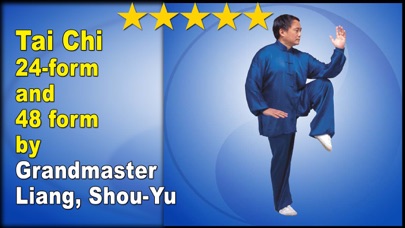
• Beautiful Tai Chi forms by Grandmaster Liang, Shou-Yu.
• Learn martial applications for each of the 24 movements.
• Includes a bonus demonstration of the 48 form.
The short forms are based upon Yang-style Tai Chi movements.
Tai Chi Chuan is an ancient internal Chinese martial art which has gained widespread popularity for its many health benefits. Today, most people practice taiji slowly to develop their balance, strength, and vitality, and the martial applications of the art are often ignored.
Also spelled Taijiquan, 'Grand Ultimate Fist' is a highly effective form of combat specializing in short and middle-range fighting.
In China, t'ai chi ch'uan is categorized under the Wudang grouping of Chinese martial arts, which are applied with internal power (jing), using Qi (energy). The history of the basic postures in the Yang form can be traced back through Wudang mountain to Shaolin Temple, developed from a series of movements originating from "Chang Quan" (Long Fist, a reference to the winding Long River, another name for the Yangtze). Around 800 AD, a philosopher named Xu, Xuan-Ping is credited for developing a long Kung Fu of 37 forms, which included these common Tai Chi movements:
• Play the Guitar
• Single Whip
• Step Up to Seven Stars
• Jade Lady Works the Shuttles
• High Pat on Horse
• Phoenix Flaps Its Wings
"Taiji Chang Quan" existed in many variations, and eventually evolved into Taijiquan. Other forms of the same era such as "Heavenly-Inborn Style", "Nine Small Heavens", and "Acquired Kung Fu" also show similarities to what later became Taijiquan. The principles of softness, sticking, adhering, and using the opponent's own momentum against himself were established in these precursory martial styles. Bodhidharma's teaching at the Buddhist Shaolin Temple around 550AD, which detailed the theory of using the mind to lead the Qi to energize the physical body, is widely considered the origin of all Internal Martial Arts, including Tai Chi.
Grandmaster Liang's martial arts ancestry originated five generations ago. He started his traditional Emei kungfu and Qigong training with his grandfather in 1948. Grandmaster Liang then sought out other renowned masters and other styles from Shaolin and Wudang. In the early sixties, Grandmaster Liang began his study and research in the few major styles of Taiji such as Yang, Chen, Sun, and Wu style, Buddhist Esoteric Qigong, and Taoist Qigong. Grandmaster Liang has many times been a gold medalist in Wushu and Taiji competitions held in Sichuan province. Grandmaster Liang lives and teaches in Vancouver, Canada.
Thank you for downloading our app! We are striving to make the best possible video apps available.
Sincerely,
The team at YMAA Publication Center, Inc.
(Yang’s Martial Arts Association)
CONTACT: [email protected]
VISIT: www.YMAA.com
WATCH: www.YouTube.com/ymaa
• 2.5 hours of streaming video lessons.
• Learn quickly with 24 easy Tai Chi movements.
• Beautiful Tai Chi forms by Grandmaster Liang, Shou-Yu.
• Learn martial applications for each of the 24 movements.
• Includes a bonus demonstration of the 48 form.
The short forms are based upon Yang-style Tai Chi movements.
Tai Chi Chuan is an ancient internal Chinese martial art which has gained widespread popularity for its many health benefits. Today, most people practice taiji slowly to develop their balance, strength, and vitality, and the martial applications of the art are often ignored.
Also spelled Taijiquan, 'Grand Ultimate Fist' is a highly effective form of combat specializing in short and middle-range fighting.
In China, t'ai chi ch'uan is categorized under the Wudang grouping of Chinese martial arts, which are applied with internal power (jing), using Qi (energy). The history of the basic postures in the Yang form can be traced back through Wudang mountain to Shaolin Temple, developed from a series of movements originating from "Chang Quan" (Long Fist, a reference to the winding Long River, another name for the Yangtze). Around 800 AD, a philosopher named Xu, Xuan-Ping is credited for developing a long Kung Fu of 37 forms, which included these common Tai Chi movements:
• Play the Guitar
• Single Whip
• Step Up to Seven Stars
• Jade Lady Works the Shuttles
• High Pat on Horse
• Phoenix Flaps Its Wings
"Taiji Chang Quan" existed in many variations, and eventually evolved into Taijiquan. Other forms of the same era such as "Heavenly-Inborn Style", "Nine Small Heavens", and "Acquired Kung Fu" also show similarities to what later became Taijiquan. The principles of softness, sticking, adhering, and using the opponent's own momentum against himself were established in these precursory martial styles. Bodhidharma's teaching at the Buddhist Shaolin Temple around 550AD, which detailed the theory of using the mind to lead the Qi to energize the physical body, is widely considered the origin of all Internal Martial Arts, including Tai Chi.
Grandmaster Liang's martial arts ancestry originated five generations ago. He started his traditional Emei kungfu and Qigong training with his grandfather in 1948. Grandmaster Liang then sought out other renowned masters and other styles from Shaolin and Wudang. In the early sixties, Grandmaster Liang began his study and research in the few major styles of Taiji such as Yang, Chen, Sun, and Wu style, Buddhist Esoteric Qigong, and Taoist Qigong. Grandmaster Liang has many times been a gold medalist in Wushu and Taiji competitions held in Sichuan province. Grandmaster Liang lives and teaches in Vancouver, Canada.
Thank you for downloading our app! We are striving to make the best possible video apps available.
Sincerely,
The team at YMAA Publication Center, Inc.
(Yang’s Martial Arts Association)
CONTACT: [email protected]
VISIT: www.YMAA.com
WATCH: www.YouTube.com/ymaa
详情
| 开发者 | YMAA Publication Center, Inc. |
|---|---|
| 类别 | 健康与健身 |
| 价格 | £9.99 |
| 年龄评级 | 4+ |
| 版本 | 1.0.3 |
| 大小 | 13.6 MB |
| 最低 iOS | 11.0 |
| 包 ID | com.ymaa.taichi2448 |
| 发布 | 2015-04-04 |
| 最后更新 | 2023-01-16 |
| 语言 | 1 语言 |
此页面回答的问题
- Tai Chi 24&48 Simplified Form 应用评论
- Tai Chi 24&48 Simplified Form 应用评级
- Tai Chi 24&48 Simplified Form 下载
- Tai Chi 24&48 Simplified Form 应用商店排名
- Tai Chi 24&48 Simplified Form 评论
- Tai Chi 24&48 Simplified Form 评论和评分
- Tai Chi 24&48 Simplified Form 是否合法
- Tai Chi 24&48 Simplified Form 是否是骗局
- Tai Chi 24&48 Simplified Form 真实用户评论
- Tai Chi 24&48 Simplified Form 评分
- Tai Chi 24&48 Simplified Form 投诉
- 人们对 Tai Chi 24&48 Simplified Form 的看法
- Tai Chi 24&48 Simplified Form 应用 评论
- Tai Chi 24&48 Simplified Form 优缺点
- Tai Chi 24&48 Simplified Form 经验
- 我应该信任 Tai Chi 24&48 Simplified Form 吗
- Tai Chi 24&48 Simplified Form 反馈
- Tai Chi 24&48 Simplified Form 评论 2026
- Tai Chi 24&48 Simplified Form 检查
- Tai Chi 24&48 Simplified Form 安全检查
