Tai Chi 24&48 Simplified Form
YMAA Publication Center, Inc. Salud y Bienestar 4+ £9.99
Mejor posición ahora
#32
a través de 2 tiendas
Pico
#12Días rastreados
10 Historial de gráficos
10 días registrados por nosotros
Tiendas
gráficos en 2 hoy
Calificaciones
ninguno aún
Precio
cambiado 3 vez(es) en nuestra ventana
Instalaciones e ingresos
Apple no publica ninguno — no adivinamos
Actualmente en la lista
Historia
Construido a partir de las propias instantáneas diarias de Astrina — un punto por día.
Posición en la lista — 🇫🇷 Top Pagado
09.09 10.09 11.09
Mostrar los números
| Día | Posición |
|---|---|
| 09.09 | #12 |
| 10.09 | #20 |
| 11.09 | #32 |
Número de valoraciones
23.07 24.07 30.08
Mostrar los números
| Día | Calificaciones |
|---|---|
| 23.07 | 0 |
| 24.07 | 0 |
| 21.08 | 0 |
| 30.08 | 0 |
Capturas de pantalla



Acerca de esta aplicación
Learn the most popular forms of Tai Chi in the world from a Grandmaster.
• 2.5 hours of streaming video lessons.
• Learn quickly with 24 easy Tai Chi movements.
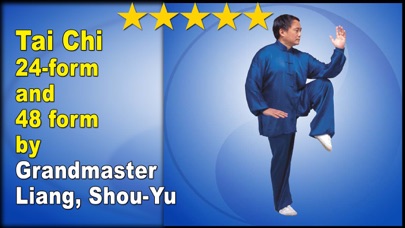
• Beautiful Tai Chi forms by Grandmaster Liang, Shou-Yu.
• Learn martial applications for each of the 24 movements.
• Includes a bonus demonstration of the 48 form.
The short forms are based upon Yang-style Tai Chi movements.
Tai Chi Chuan is an ancient internal Chinese martial art which has gained widespread popularity for its many health benefits. Today, most people practice taiji slowly to develop their balance, strength, and vitality, and the martial applications of the art are often ignored.
Also spelled Taijiquan, 'Grand Ultimate Fist' is a highly effective form of combat specializing in short and middle-range fighting.
In China, t'ai chi ch'uan is categorized under the Wudang grouping of Chinese martial arts, which are applied with internal power (jing), using Qi (energy). The history of the basic postures in the Yang form can be traced back through Wudang mountain to Shaolin Temple, developed from a series of movements originating from "Chang Quan" (Long Fist, a reference to the winding Long River, another name for the Yangtze). Around 800 AD, a philosopher named Xu, Xuan-Ping is credited for developing a long Kung Fu of 37 forms, which included these common Tai Chi movements:
• Play the Guitar
• Single Whip
• Step Up to Seven Stars
• Jade Lady Works the Shuttles
• High Pat on Horse
• Phoenix Flaps Its Wings
"Taiji Chang Quan" existed in many variations, and eventually evolved into Taijiquan. Other forms of the same era such as "Heavenly-Inborn Style", "Nine Small Heavens", and "Acquired Kung Fu" also show similarities to what later became Taijiquan. The principles of softness, sticking, adhering, and using the opponent's own momentum against himself were established in these precursory martial styles. Bodhidharma's teaching at the Buddhist Shaolin Temple around 550AD, which detailed the theory of using the mind to lead the Qi to energize the physical body, is widely considered the origin of all Internal Martial Arts, including Tai Chi.
Grandmaster Liang's martial arts ancestry originated five generations ago. He started his traditional Emei kungfu and Qigong training with his grandfather in 1948. Grandmaster Liang then sought out other renowned masters and other styles from Shaolin and Wudang. In the early sixties, Grandmaster Liang began his study and research in the few major styles of Taiji such as Yang, Chen, Sun, and Wu style, Buddhist Esoteric Qigong, and Taoist Qigong. Grandmaster Liang has many times been a gold medalist in Wushu and Taiji competitions held in Sichuan province. Grandmaster Liang lives and teaches in Vancouver, Canada.
Thank you for downloading our app! We are striving to make the best possible video apps available.
Sincerely,
The team at YMAA Publication Center, Inc.
(Yang’s Martial Arts Association)
CONTACT: [email protected]
VISIT: www.YMAA.com
WATCH: www.YouTube.com/ymaa
• 2.5 hours of streaming video lessons.
• Learn quickly with 24 easy Tai Chi movements.
• Beautiful Tai Chi forms by Grandmaster Liang, Shou-Yu.
• Learn martial applications for each of the 24 movements.
• Includes a bonus demonstration of the 48 form.
The short forms are based upon Yang-style Tai Chi movements.
Tai Chi Chuan is an ancient internal Chinese martial art which has gained widespread popularity for its many health benefits. Today, most people practice taiji slowly to develop their balance, strength, and vitality, and the martial applications of the art are often ignored.
Also spelled Taijiquan, 'Grand Ultimate Fist' is a highly effective form of combat specializing in short and middle-range fighting.
In China, t'ai chi ch'uan is categorized under the Wudang grouping of Chinese martial arts, which are applied with internal power (jing), using Qi (energy). The history of the basic postures in the Yang form can be traced back through Wudang mountain to Shaolin Temple, developed from a series of movements originating from "Chang Quan" (Long Fist, a reference to the winding Long River, another name for the Yangtze). Around 800 AD, a philosopher named Xu, Xuan-Ping is credited for developing a long Kung Fu of 37 forms, which included these common Tai Chi movements:
• Play the Guitar
• Single Whip
• Step Up to Seven Stars
• Jade Lady Works the Shuttles
• High Pat on Horse
• Phoenix Flaps Its Wings
"Taiji Chang Quan" existed in many variations, and eventually evolved into Taijiquan. Other forms of the same era such as "Heavenly-Inborn Style", "Nine Small Heavens", and "Acquired Kung Fu" also show similarities to what later became Taijiquan. The principles of softness, sticking, adhering, and using the opponent's own momentum against himself were established in these precursory martial styles. Bodhidharma's teaching at the Buddhist Shaolin Temple around 550AD, which detailed the theory of using the mind to lead the Qi to energize the physical body, is widely considered the origin of all Internal Martial Arts, including Tai Chi.
Grandmaster Liang's martial arts ancestry originated five generations ago. He started his traditional Emei kungfu and Qigong training with his grandfather in 1948. Grandmaster Liang then sought out other renowned masters and other styles from Shaolin and Wudang. In the early sixties, Grandmaster Liang began his study and research in the few major styles of Taiji such as Yang, Chen, Sun, and Wu style, Buddhist Esoteric Qigong, and Taoist Qigong. Grandmaster Liang has many times been a gold medalist in Wushu and Taiji competitions held in Sichuan province. Grandmaster Liang lives and teaches in Vancouver, Canada.
Thank you for downloading our app! We are striving to make the best possible video apps available.
Sincerely,
The team at YMAA Publication Center, Inc.
(Yang’s Martial Arts Association)
CONTACT: [email protected]
VISIT: www.YMAA.com
WATCH: www.YouTube.com/ymaa
Detalles
| Desarrollador | YMAA Publication Center, Inc. |
|---|---|
| Categoría | Salud y Bienestar |
| Precio | £9.99 |
| Clasificación por edad | 4+ |
| Versión | 1.0.3 |
| Tamaño | 13.6 MB |
| iOS mínimo | 11.0 |
| ID del paquete | com.ymaa.taichi2448 |
| Lanzado | 2015-04-04 |
| Última actualización | 2023-01-16 |
| Idiomas | 1 idiomas |
Lo que esta página responde
- Tai Chi 24&48 Simplified Form reseñas de aplicaciones
- Tai Chi 24&48 Simplified Form calificación de la aplicación
- Tai Chi 24&48 Simplified Form descarga
- Tai Chi 24&48 Simplified Form rango en la tienda de aplicaciones
- reseñas de Tai Chi 24&48 Simplified Form
- reseñas y calificaciones de Tai Chi 24&48 Simplified Form
- es Tai Chi 24&48 Simplified Form legítimo
- es Tai Chi 24&48 Simplified Form una estafa
- reseñas de usuarios reales de Tai Chi 24&48 Simplified Form
- calificación de Tai Chi 24&48 Simplified Form
- quejas de Tai Chi 24&48 Simplified Form
- lo que la gente dice sobre Tai Chi 24&48 Simplified Form
- reseñas de Tai Chi 24&48 Simplified Form aplicación
- pros y contras de Tai Chi 24&48 Simplified Form
- experiencia de Tai Chi 24&48 Simplified Form
- debería confiar en Tai Chi 24&48 Simplified Form
- comentarios de Tai Chi 24&48 Simplified Form
- reseña de Tai Chi 24&48 Simplified Form 2026
- verificación de Tai Chi 24&48 Simplified Form
- verificación de seguridad de Tai Chi 24&48 Simplified Form
